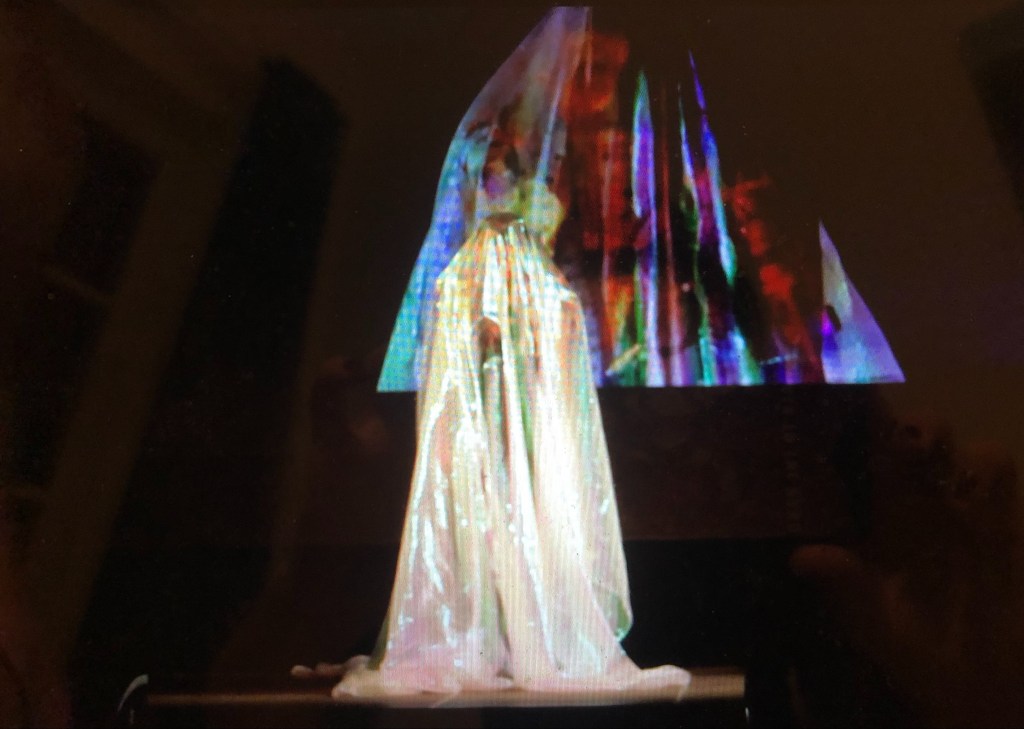
En Echo, created between 1993 and 1994 by contemporary composer Philippe Manoury, explores the organic, animalistic, and quasi-erotic relationship that can emerge between a singer’s voice and the machine, conceived as an artificial sound object. The singer embodies the role of a young girl—possibly referencing Nabokov’s Lolita—while the machine acts as an imaginary mirror, conjuring memories, images, and sculpting her voice as a kind of doubling.
To the extreme emotional complexity carried by the voice—which Manoury describes as a “polyphony of behaviors,” incorporating pitch, phonemes, noise, and spoken voice—the machine responds by creating around the singer’s voice a hypersensual sonic form, an amniotic liquid space, a hypersexualized cyprine-like environment.
We extend this exploration by experimentally questioning the hypersexualization of the animated object through the particular erotic relationship that the singer’s voice can now establish with an artificial gesture.
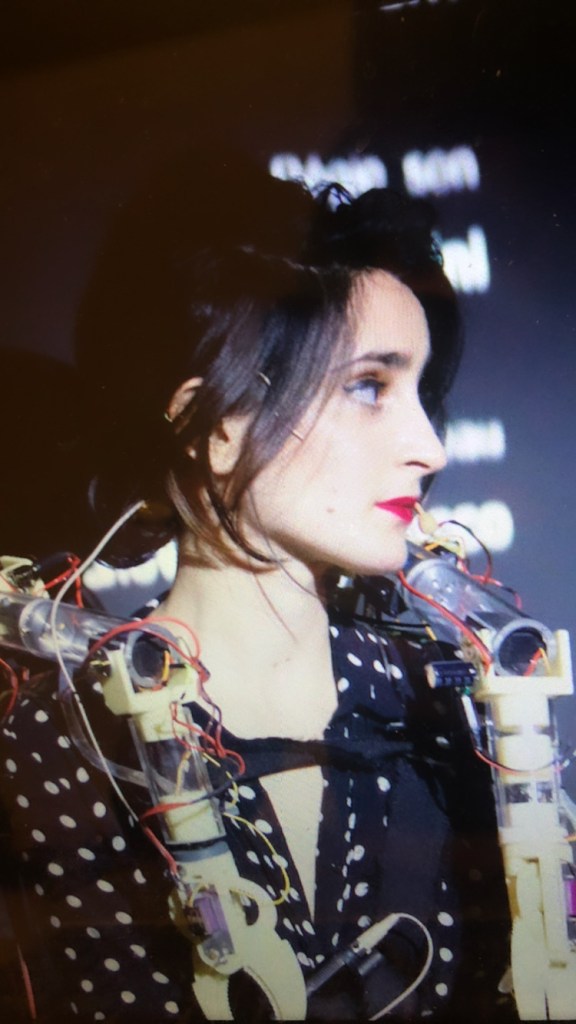
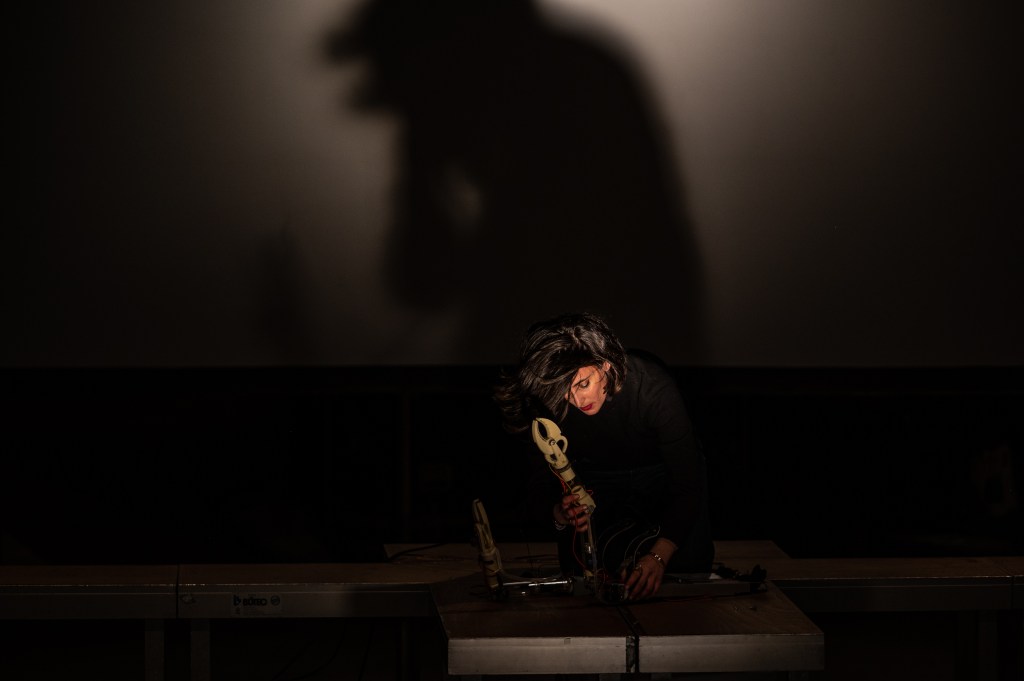
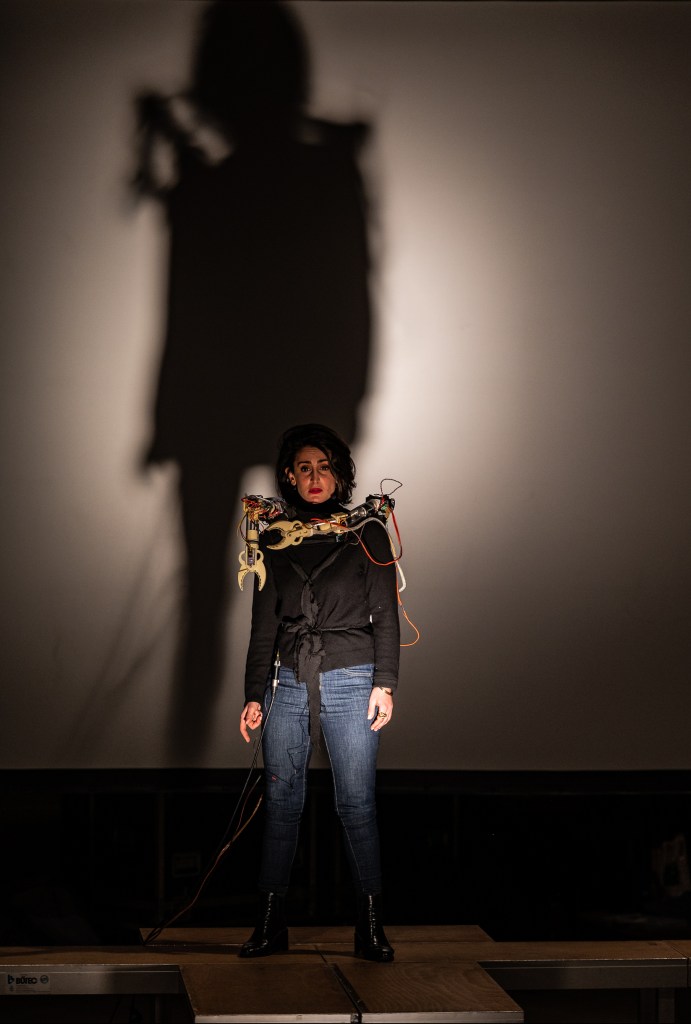
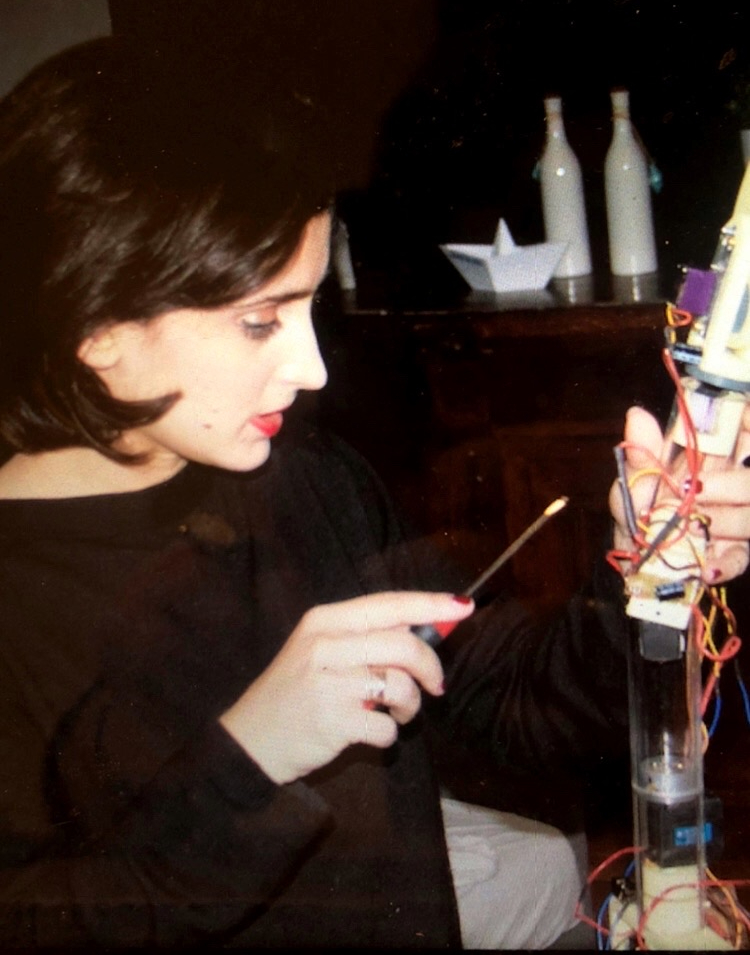
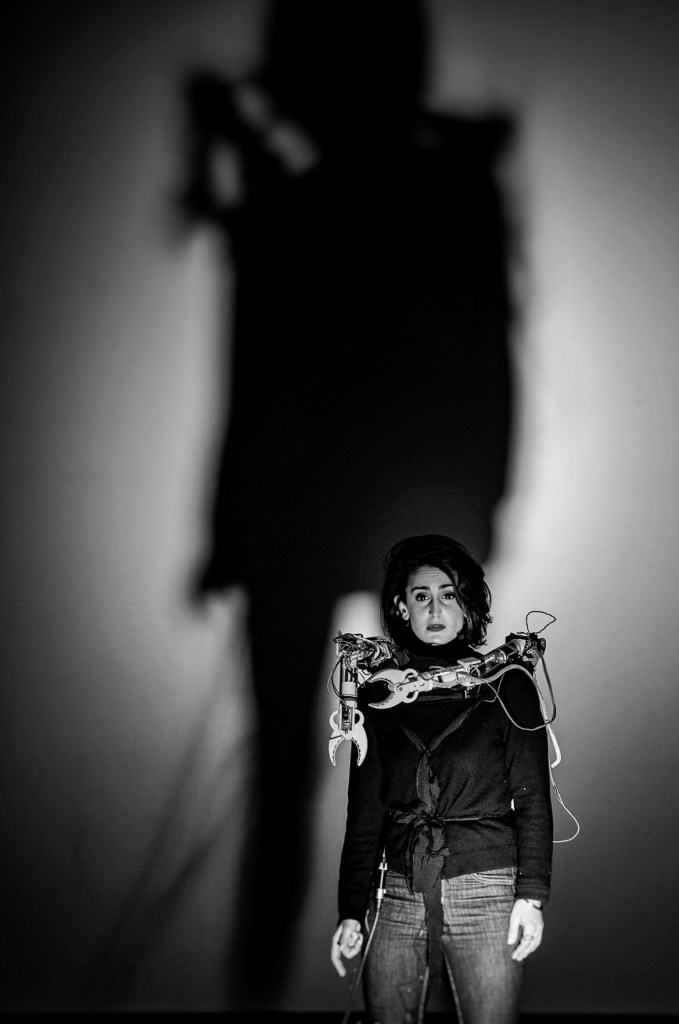
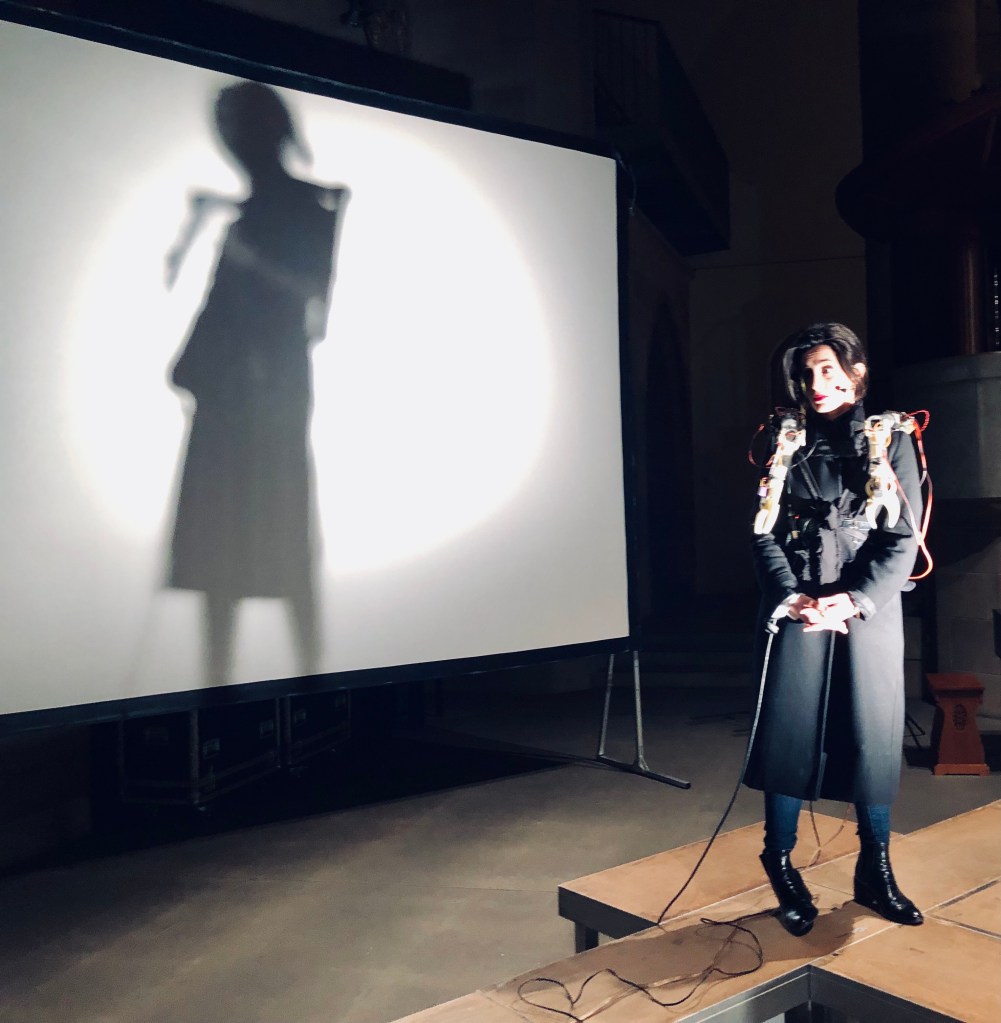
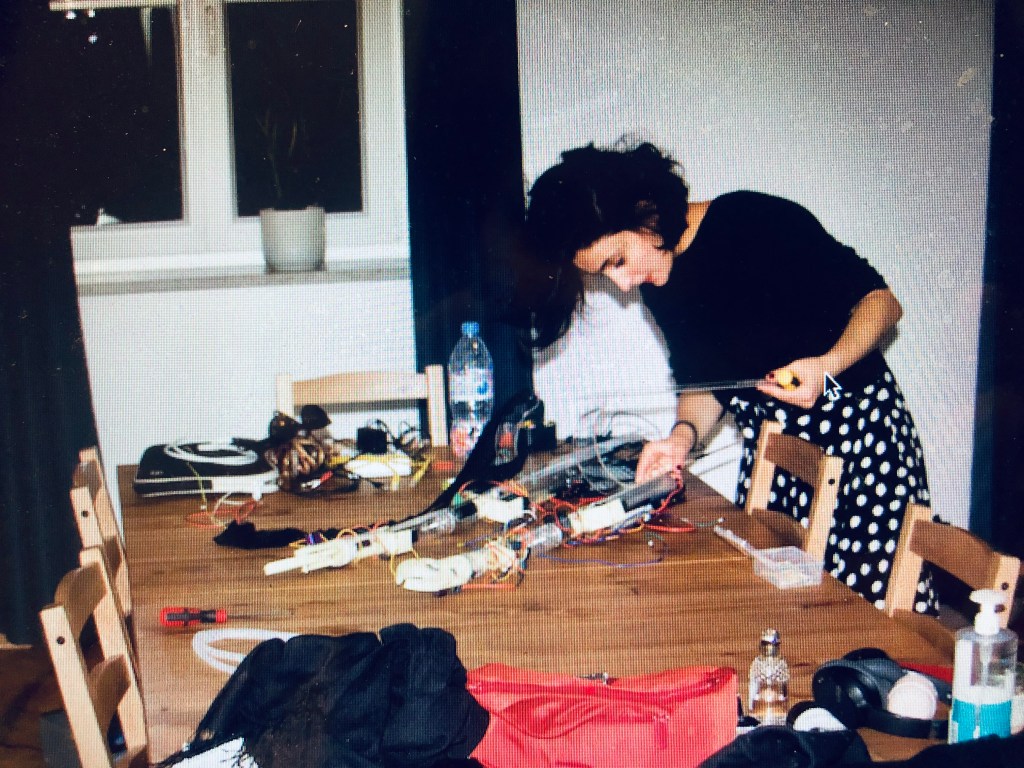
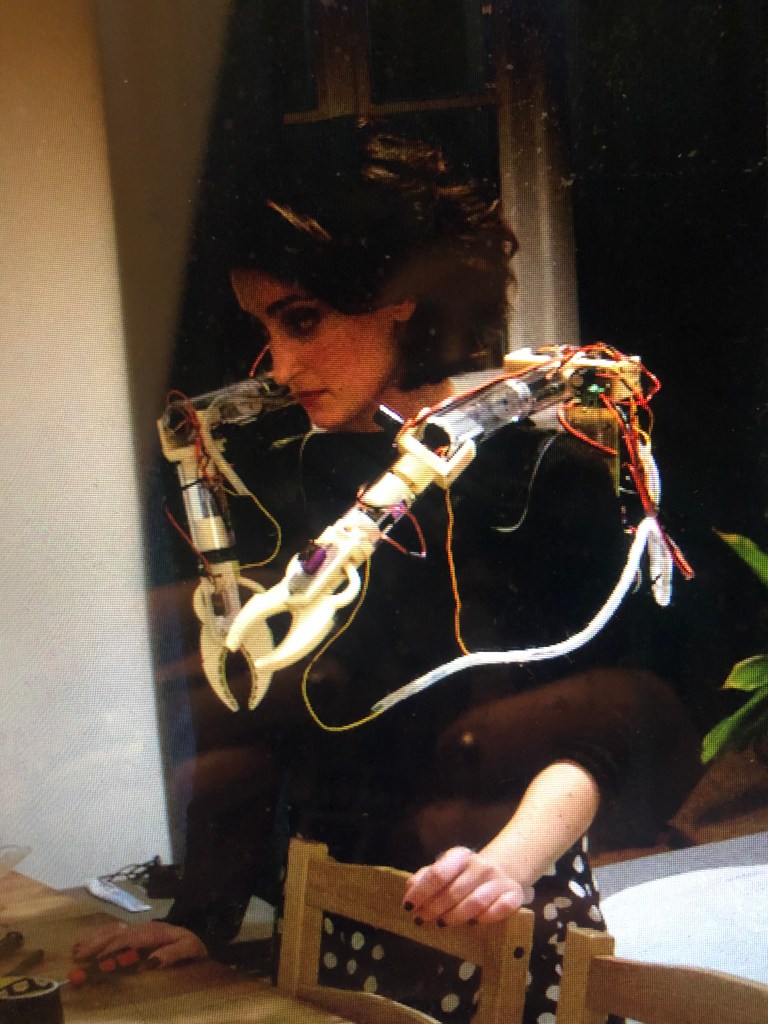
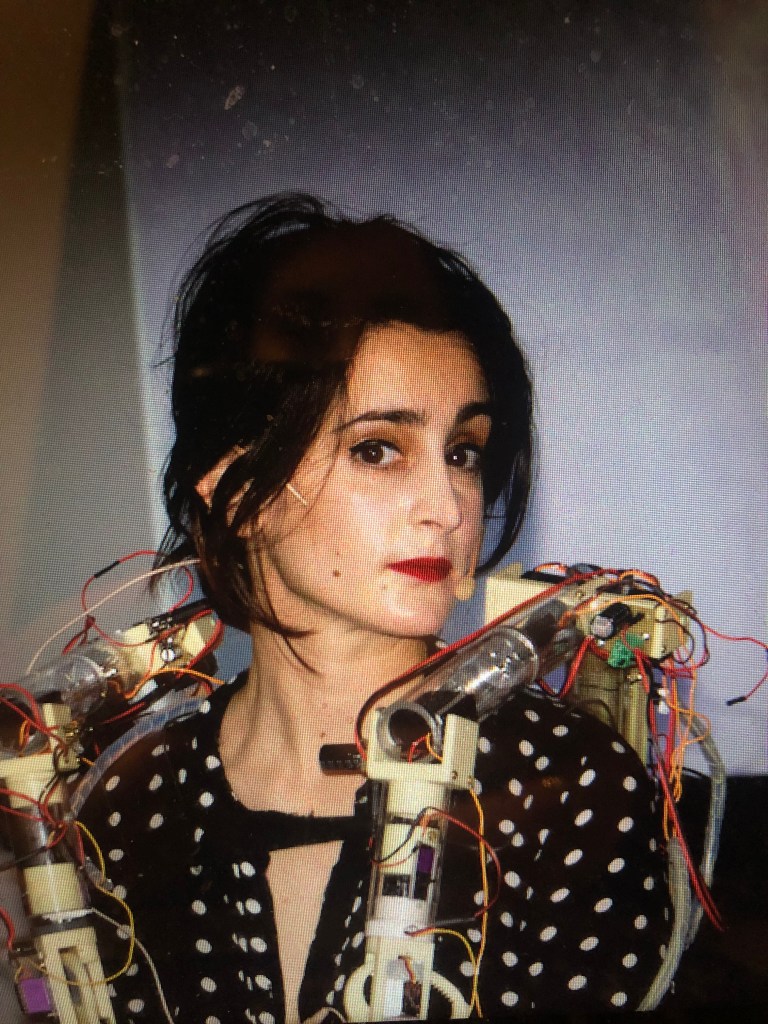
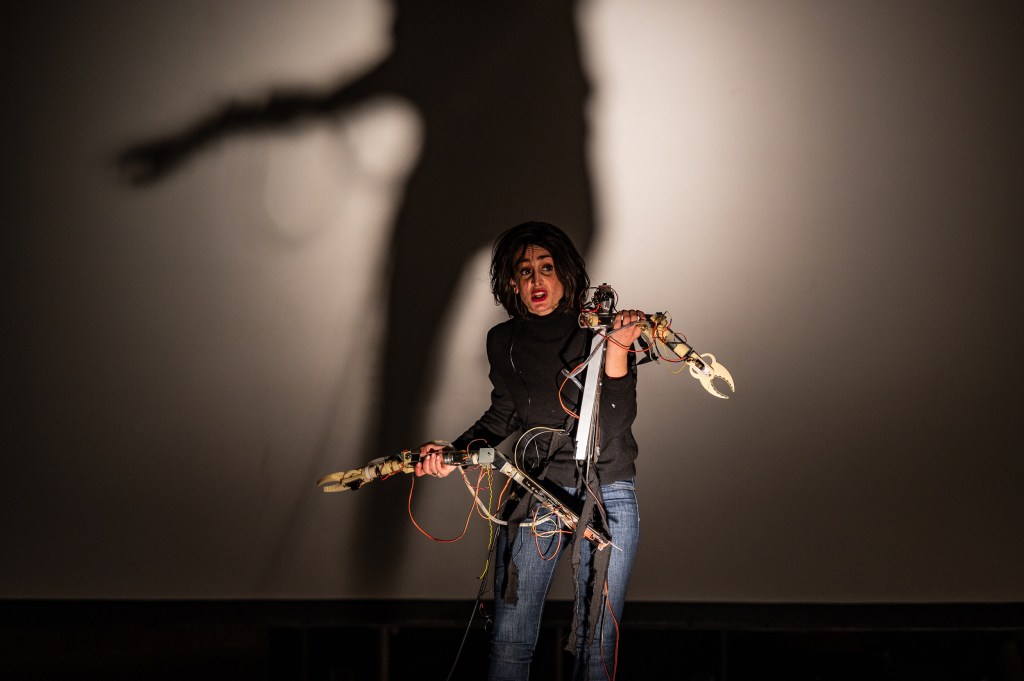
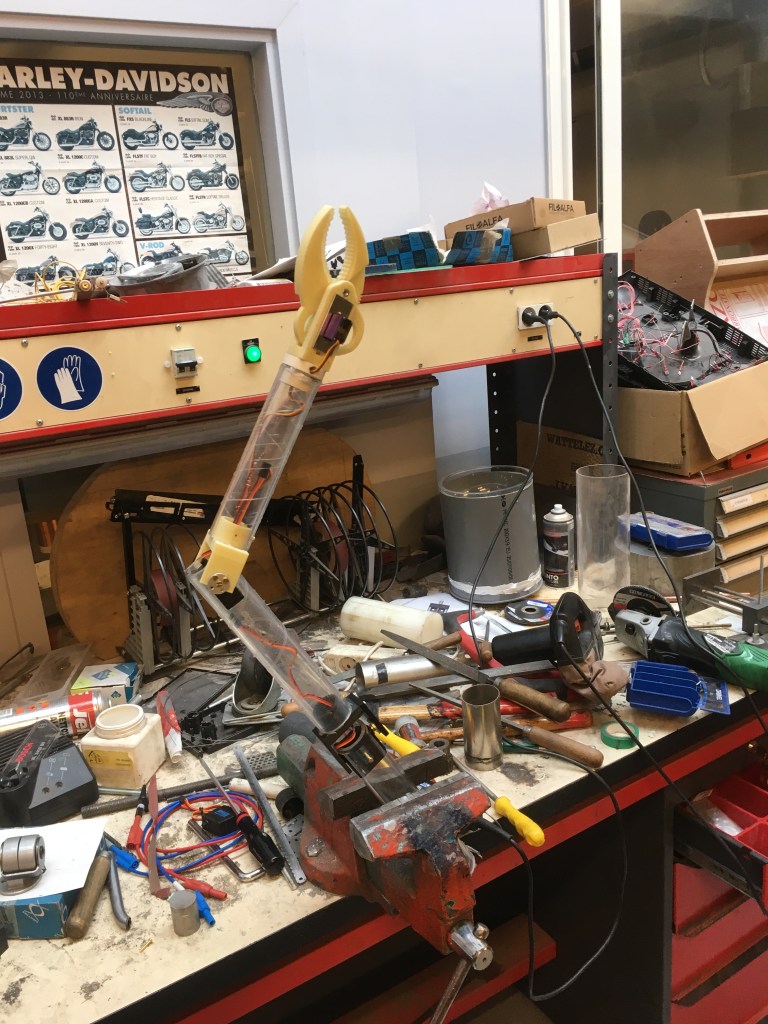
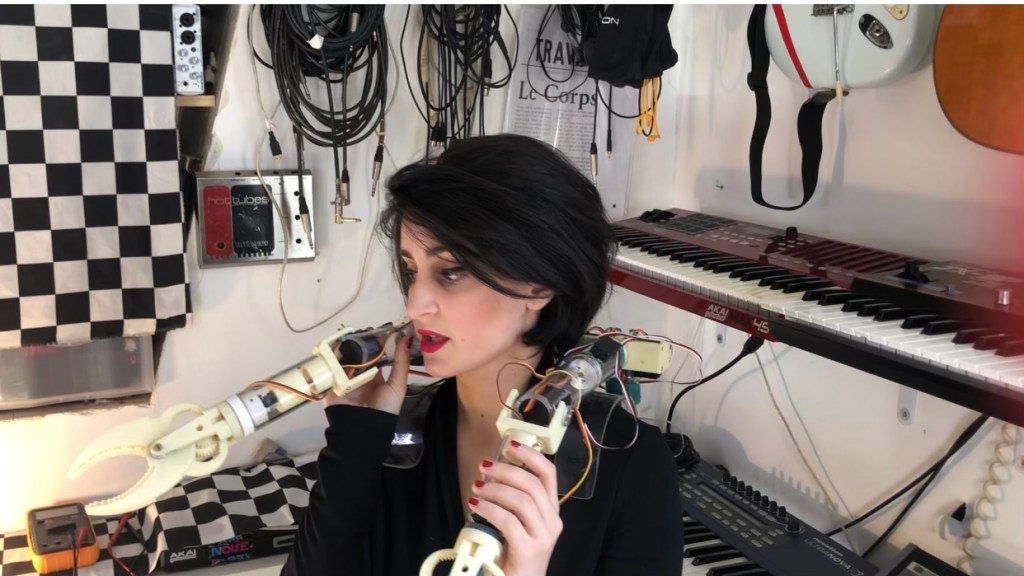
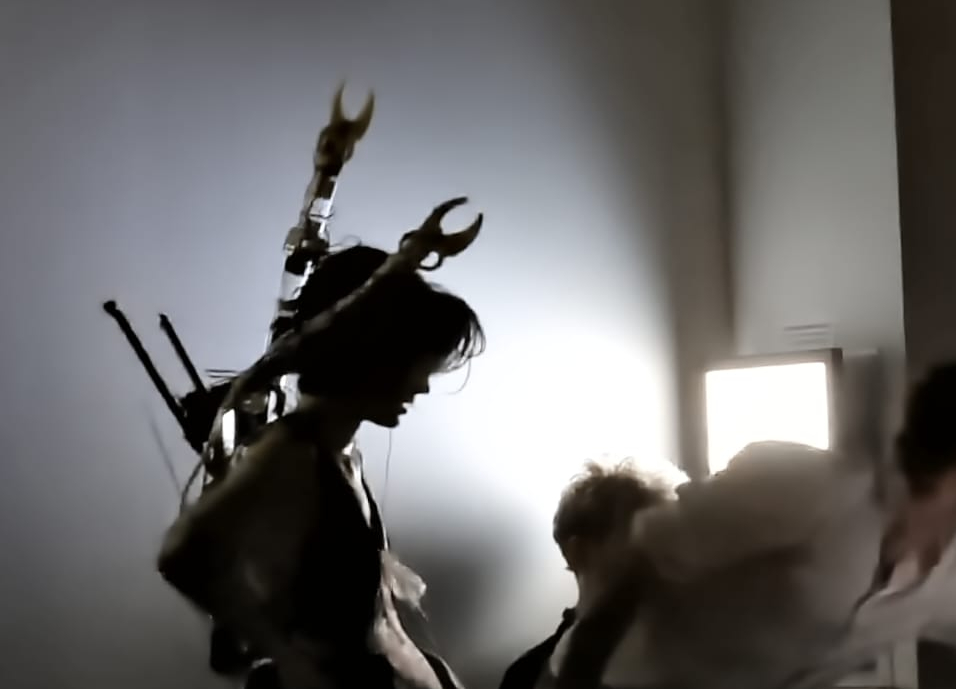
An exoskeleton, composed of two robotic arms attached to the singer’s body, continuously listens to her voice. It is controlled by an artificial intelligence algorithm trained on the singer’s real gestures and responds to her variations, intonations, fragility, hysterical impulses, and ambivalences. It creates a choreographic halo around her, forming a bodily continuum of her imagination.
This work naturally echoes the transhumanist movement of body augmentation through technology—via brain implants and electronic chips embedded in organs—and its hyperrational phantasmagoria. It also raises questions about the ambivalence of language conveyed by artificial gesture, particularly at the singular point where the algorithm encounters a bug and loops infinitely.
The project also embraces the uncanny discomfort artificial gestures can provoke when they appear too human to be carried by a machine, recalling the famous uncanny valley concept introduced by cyberneticist Masahiro Mori.
Following Philippe Manoury’s experimental methodology, the approach here is above all exploratory. It evolves through numerous interaction sessions between the singer and her exoskeleton, during which both gradually build a shared poetic material, mutually influencing, adapting to, or even playfully challenging each other.
A collective project by Clémence Martel, Syd Reynal, and Alessandro Ratoci, in collaboration with the ETIS laboratory (UMR 8051 CNRS / CY Cergy Paris University / ENSEA).
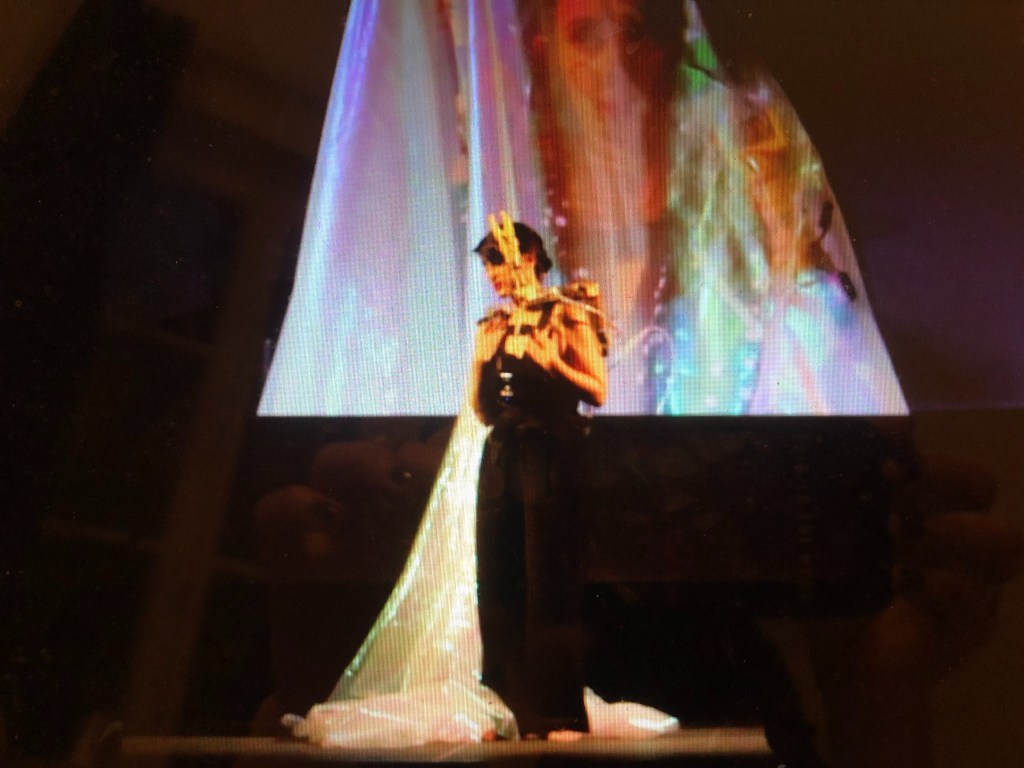
Performed at:
-Trieste – 11.2021 (Teatro del Suono/Paradiso Festival, Curated Cantierezero collective),
-Stuttgart – Hospitalkirshe – 01.2022
-Backnang – 02.2022.